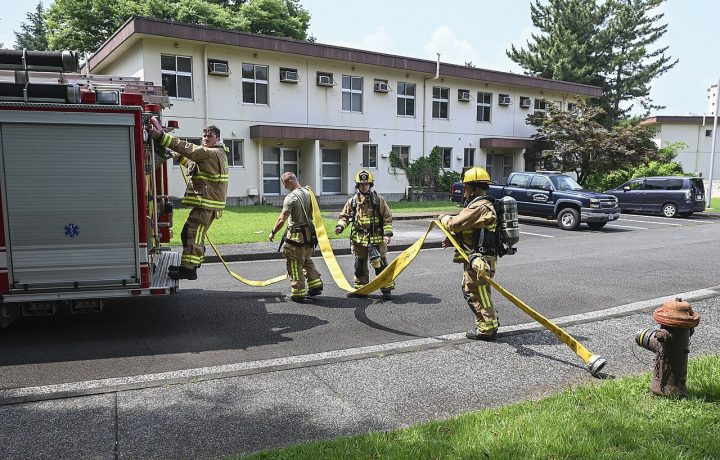
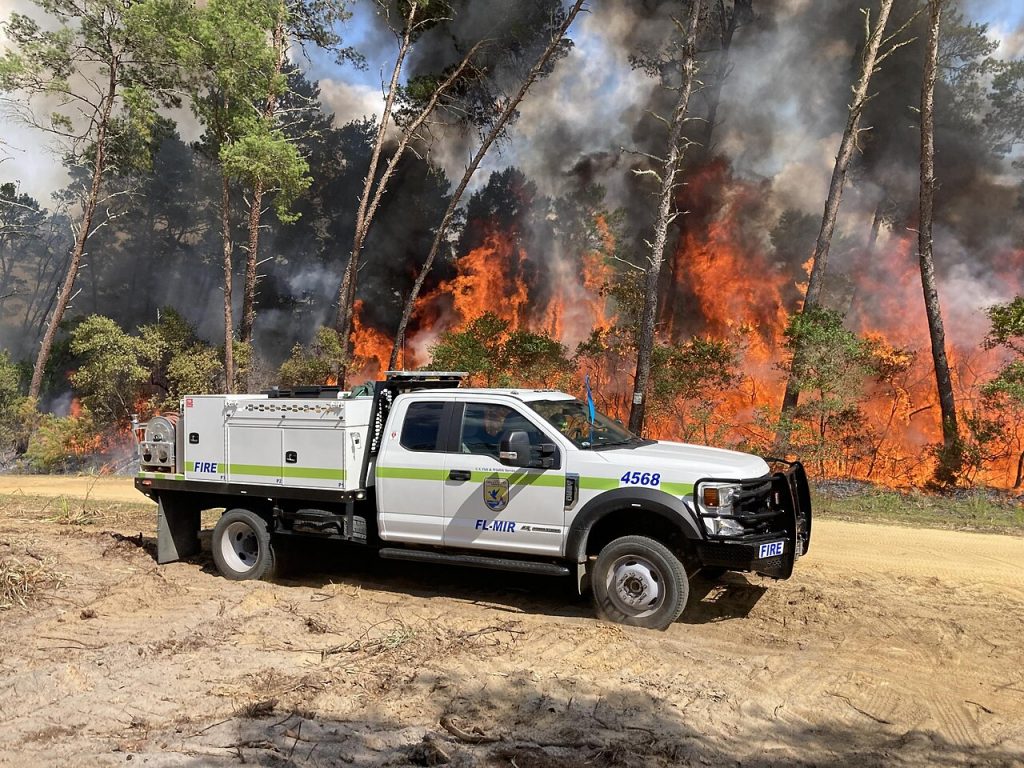
Brush fire is part of DeBary’s story. When the community’s first volunteer fire company answered its very first call in October 1953, it was a brush fire. Seventy years later, the pine flatwoods, palmetto scrub and wetland edges that make West Volusia beautiful still carry fire, especially when the rain stops and the wind picks up. The good news is that there is a lot you can do to protect your home and family. This guide covers when the risk is highest, how to create defensible space, the rules for burning yard debris, Volusia County burn bans, and how to be ready if you need to leave.
Understanding Central Florida’s fire seasons
Florida can see wildfires in any month, but the risk follows the weather. Florida’s dry season runs roughly from October through May. As winter cold fronts bring dry air and gusty winds, grasses, leaves and pine needles dry out. By spring, months of limited rain have depleted moisture in vegetation and soil, and fire activity typically peaks in late spring into early summer, before the daily summer rains settle in.
Then comes lightning season. Central Florida’s summer thunderstorms bring frequent lightning, and early in the wet season, strikes can land on vegetation that is still parched from the spring. That is exactly what happened in DeBary in June 2019.
A local lesson: the 2019 Dutchman’s Bend fire
On June 1, 2019, a brush fire started near Holladay Road and Dutchman’s Bend Road in DeBary. News 13 reported that it was believed to have been started by lightning, and that strong winds later carried embers across Dutchman’s Bend Road, helping the fire grow to more than 100 acres. The Florida Forest Service led the response. The fire threatened a Duke Energy power plant and damaged nearby railroad tracks, shutting down the rail line.
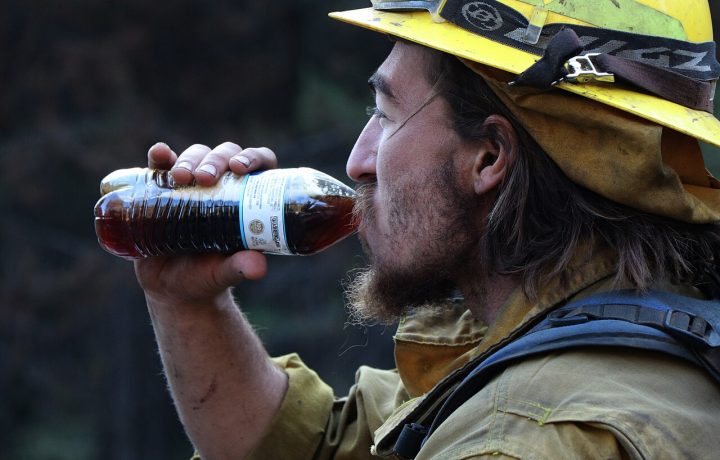
It was a multi-day fire, and DeBary residents responded the way this community always has: by donating water, food and ice for the crews working in the heat. That support is a big part of why the association’s rehab work matters. Learn more in our article on firefighter rehab and hydration.
Create defensible space with the Home Ignition Zone
Firewise USA, a program of the National Fire Protection Association, organizes wildfire preparation around the Home Ignition Zone. The idea is simple: the condition of your home and the area immediately around it largely determines whether embers and flames can ignite it. NFPA divides the zone into three parts, measured from the furthest attached point of your home, such as a deck or porch.
| Zone | Distance from home | Main goal | Key actions |
|---|---|---|---|
| Immediate | 0 to 5 feet | Noncombustible | Clear leaves and pine needles from roof and gutters; replace mulch with rock, gravel or pavers; move firewood and anything flammable away from walls and out from under decks; screen vents with 1/8-inch metal mesh |
| Intermediate | 5 to 30 feet | Lean, clean and green | Keep lawns mowed to 4 inches or less; remove ladder fuels so fire cannot climb into trees; keep branches at least 10 feet from the house; space trees and shrubs apart; clear vegetation from around propane tanks |
| Extended | 30 to 100 feet | Reduced fuel | Remove dead plants, fallen branches and debris; thin dense vegetation; clear around sheds and outbuildings; work with neighbors where zones overlap |
Florida-specific tips for your yard
- Pine needles and oak leaves pile up quickly on roofs and in gutters, especially after a cold front. Clear them regularly during the dry season.
- Pine-bark and pine-straw mulch can catch embers. Within 5 feet of the house, gravel, pavers or bare soil are safer choices.
- Saw palmetto and wax myrtle are common in West Volusia and can burn intensely. Keep thick stands trimmed back from your home, fences and sheds.
- Lanais and screen enclosures collect debris along their edges. Sweep them out and keep cushions, firewood and supplies stored away when fire danger is high.
- Visible house numbers help fire crews find you quickly. NFPA recommends reflective, noncombustible numbers at least 4 inches tall that can be seen from the road.
- Driveway access matters for fire trucks. Trim branches back from driveways and private roads so apparatus can get in and turn around.

Burning yard debris: know Florida’s rules first
Many residents still burn leaves and branches, but burning is regulated by the state and often restricted locally. The Florida Forest Service, part of the Florida Department of Agriculture and Consumer Services, and Florida’s open burning rule (Florida Administrative Code Rule 62-256.700) set out the basic requirements for burning yard waste without a state authorization. In summary:
- Burn only yard waste such as leaves, grass clippings, brush, tree limbs and palm fronds, generated on your own residential property.
- Make sure no local city or county ordinance prohibits burning, and that no burn ban is in effect.
- Keep the pile no more than 8 feet in diameter, on ground cleared down to bare soil, or use a noncombustible container covered with wire mesh.
- Meet the setbacks: at least 25 feet from woods, brush or any combustible structure, including your own house; 50 feet from any paved public road; and 150 feet from any occupied building other than your own.
- Light the fire after 9 a.m. Eastern time and have it completely out at least one hour before sunset.
- Do not burn on windy days, and make sure smoke does not reduce visibility on roads.
- Stay with the fire at all times, with a water hose and shovel ready.
- Never burn household garbage, paper products, treated lumber, plastics, rubber, tires, pesticides, paint or aerosol cans.
Piles larger than 8 feet across require an authorization from the Florida Forest Service, along with suppression equipment and larger setbacks. Volusia County is served by the Florida Forest Service’s Bunnell District.
Volusia County burn bans
Burn bans in Florida are issued by local governments, not by the Florida Forest Service. When drought conditions climb, Volusia County may restrict outdoor burning to reduce the risk of wildfire. Here are recent examples:
- In June 2024, Volusia County announced a burn ban that prohibited open fires, including bonfires, campfires and yard debris burning not permitted by the Florida Forest Service, while still allowing above-ground charcoal, gas and electric grills.
- In April 2025, the county again restricted outdoor burning as dry conditions raised the wildfire threat across Central Florida.
- On February 20, 2026, Volusia County issued an outdoor burn ban for unincorporated areas plus Oak Hill, Lake Helen and Pierson, citing unusually high drought conditions. News 13 reported a Keetch-Byram Drought Index reading of 432 on a scale that tops out at 800. The ban prohibited yard trash burning, bonfires, campfires, warming fires and fire pits, while allowing contained gas or charcoal grills.
Notice that a county ban does not always cover every city. DeBary is an incorporated city, so check both Volusia County and City of DeBary announcements to see what applies to your address. When in doubt, do not burn.
Everyday sparks that start brush fires
Lightning gets the headlines, but people start many brush fires by accident. During the dry season, be especially careful with:
- Vehicles and equipment. Hot exhaust systems and catalytic converters can ignite dry grass. Do not park or idle on tall, dry vegetation.
- Trailer chains. Chains dragging on the pavement throw sparks into roadside grass. Make sure safety chains are secured.
- Mowers and power tools. Blades striking rocks can spark. Mow in the morning when humidity is higher, and keep a hose nearby.
- Cigarettes. Never toss them from a car window or onto dry ground.
- Campfires and fire pits. Follow burn bans and never leave a fire unattended.
- Fireworks. Use them only where legal, away from dry vegetation, with water on hand.
If you see smoke or fire in the woods, along the road or behind a neighborhood, call 911 right away. Early reports make a big difference.
Be ready to go: your wildfire go-bag and plan
Brush fires in Central Florida usually move along the ground, but wind-driven fires can move quickly, and smoke can make roads dangerous. If officials tell you to leave, go right away. Having a bag packed ahead of time makes that decision easy.
Go-bag checklist
- Water and non-perishable snacks for every person
- Prescription medications and copies of prescriptions
- Copies of IDs, insurance policies and other important documents in a waterproof bag
- Phone chargers and a charged power bank
- Flashlight, extra batteries and a battery-powered or hand-crank radio
- A change of clothes and sturdy shoes
- N95 masks to reduce smoke exposure
- Glasses, hearing aids and mobility aids
- Pet food, leashes, carriers and vaccination records
- Cash in small bills
Plan your exit
- Know at least two ways out of your neighborhood, since a fire or smoke may block one road.
- Sign up for Volusia County emergency alerts and follow official City of DeBary and Volusia County channels.
- Back your car into the driveway during high fire danger so you can leave quickly.
- Decide where you will go, such as a friend’s or relative’s home outside the area.
- If fire is close and you have time, close all windows and doors, move patio furniture and doormats away from the house, and leave lights on so firefighters can see your home through smoke.
The same go-bag works for hurricanes. See our hurricane season fire and CO safety guide for more on storm preparation.

Prescribed fire is part of the solution
You may sometimes see smoke from planned burns in state forests and conservation lands around the St. Johns River. Prescribed fire, set by trained crews under carefully chosen weather conditions, reduces the build-up of brush and leaf litter that would otherwise feed a much more intense wildfire. If you see smoke and are not sure whether it is a planned burn, it is always okay to call 911.
How the community helps
Long brush fires test everyone, especially the firefighters who work for hours in heavy gear under the Florida sun. The DeBary Volunteer Fire Support Team helps by supporting those crews with rehab supplies such as water, ice, snacks, shade and fans. You can read more about our role in what a support unit does, and about our roots in that first brush fire call of 1953 on our history page.
Frequently asked questions
When is wildfire season in Central Florida?
Florida can have wildfires any time of year, but risk builds through the dry season, which runs roughly from October through May, and typically peaks in late spring before the summer rains arrive. Early lightning storms on dry vegetation can also start fires.
Can I burn yard debris in my backyard in DeBary?
State rules allow limited burning of yard waste on your own residential property only if local ordinances permit it, setbacks are met, the pile is no more than 8 feet across, and no burn ban is in effect. Always check with the City of DeBary, Volusia County and the Florida Forest Service before you burn.
What is the Home Ignition Zone?
It is the Firewise USA framework for the area around your home: the immediate zone from 0 to 5 feet, the intermediate zone from 5 to 30 feet, and the extended zone from 30 to 100 feet. Reducing fuel in each zone helps your home resist embers and flames.
Who issues burn bans in Volusia County?
Burn bans are issued by local governments, not by the Florida Forest Service. Volusia County bans have at times covered only unincorporated areas and certain cities, so check whether a ban applies to your address.
What should be in a wildfire go-bag?
Pack water, medications, copies of important documents, phone chargers, a flashlight, a battery-powered radio, a change of clothes, N95 masks for smoke, and food and supplies for pets.
Sources and further reading
- Florida Forest Service (FDACS): Know the Law Before Burning Outdoors
- Florida Administrative Code Rule 62-256.700: Open Burning Allowed
- NFPA: Firewise USA
- U.S. Department of Energy Building America Solution Center: Defensible Space (NFPA zones)
- WUSF: Florida’s Wildfire Season and the Weather
- News 13: DeBary brush fire threatening power plant, railroad (June 2019)
- News 13: Volusia County puts outdoor burn ban in place (February 2026)
- Observer Local News: Volusia County institutes burn ban amid drought (June 2024)
When brush fires burn for hours or days, our volunteers make sure firefighters have water, ice and shade. Join the DeBary Volunteer Fire Support Team and be part of the support crew.